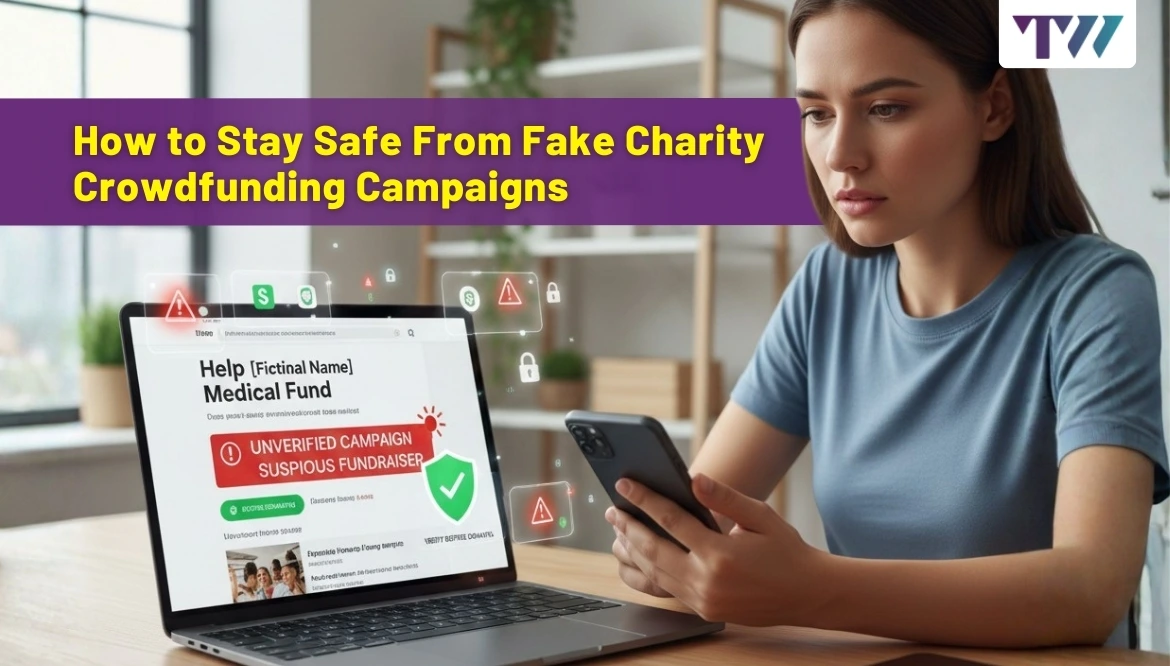
How to Stay Safe From Fake Charity Crowdfunding Campaigns
Online charity crowdfunding has made it easier to help people during emergencies, medical crises, and natural disasters. A few clicks can send money to someone who appears to be in need. While many campaigns are genuine, fake charity crowdfunding scams continue to grow and target kind-hearted donors.
Scammers often use emotional stories, urgent requests, and stolen images to pressure people into donating quickly. Learning how these scams work helps you protect your money and ensure your support reaches the right place.
What Are Fake Charity Crowdfunding Campaigns
Fake charity crowdfunding campaigns pretend to collect money for real-sounding causes but send donations directly to scammers. These campaigns often appear on popular fundraising platforms or spread through social posts, messages, and emails.
Some scammers create entirely fake stories, while others copy real situations and redirect funds for personal use.
Why Fake Charity Campaigns Are So Common
Crowdfunding scams succeed because they rely on emotion.
Common Reasons Scammers Use Charity Campaigns
- People want to help during crises
- Donors often act quickly
- Stories involve illness, accidents, or disasters
- Donations feel personal and direct
Scammers know urgency reduces careful checking.
Warning Signs of Fake Charity Crowdfunding Campaigns
Spotting early red flags prevents regret later.
Urgent and Emotional Language
Fake campaigns often pressure donors with phrases like:
- “Donate now or time will run out.”
- “Last chance to save a life”
- “Please help before it’s too late.”
Real causes welcome support but rarely force panic.
Lack of Clear Details
Legitimate campaigns provide clear information.
Watch out for:
- No explanation of how funds will be used
- Missing updates
- Vague medical or emergency details
If the story feels incomplete, pause before donating.
No Verifiable Organizer Information
A real campaign usually lists:
- Organizer name
- Location
- Relationship to the beneficiary
Fake campaigns avoid personal accountability.
Stolen Photos or Videos
Scammers often copy images from:
- News articles
- Social pages
- Old fundraising campaigns
Reverse image searches help reveal copied visuals.
Requests to Donate Outside the Platform
Some scammers ask donors to:
- Send money through personal payment apps
- Transfer funds directly
- Avoid platform protection
This removes safeguards and increases risk.
How to Check If a Charity Campaign Is Real
Verification takes only a few minutes and saves money.
Research the Organizer
- Search the organizer’s name online
- Look for social profiles linked to the campaign
- Check if others mention the same cause
A real organizer leaves a trail.
Read Updates Carefully
Genuine campaigns post:
- Regular progress updates
- Proof of expenses
- Photos showing progress
Silence after fundraising starts raises concern.
Check Comments and Questions
Review the campaign discussion section.
Look for:
- Donor questions left unanswered
- Similar comments are posted repeatedly
- Disabled comments
Open communication builds trust.
Search for the Cause Online
If the campaign claims a public incident:
- Search local news coverage
- Look for official announcements
- Verify hospital or disaster details
Scammers often rely on people skipping this step.
Be Careful With Social Media Links
Fake campaigns spread quickly through shared posts.
Common Tactics Used
- Fake celebrity endorsements
- Emotional captions copied across profiles
- Newly created accounts sharing the link
Avoid donating directly from shared posts without checks.
How Fake Campaigns Use Emotional Pressure
Scammers study human reactions.
Common Emotional Triggers
- Sick children's stories
- Urgent medical treatments
- Disaster relief appeals
- Claims of family emergencies
Emotion should never replace verification.
Safe Donation Practices to Follow
Protecting yourself does not reduce kindness.
Donate Through Trusted Platforms
Well-known platforms offer:
- Fraud monitoring
- Reporting options
- Refund support
Avoid private payment requests.
Set a Personal Rule Before Donating
Before sending money:
- Pause for five minutes
- Verify campaign details
- Read platform policies
Small pauses prevent big mistakes.
Donate to Registered Organizations When Possible
Registered charities offer:
- Transparency reports
- Legal accountability
- Public records
Crowdfunding works best when combined with caution.
What to Do If You Donated to a Fake Campaign
Quick action limits damage.
Immediate Steps
- Report the campaign on the platform
- Contact your payment provider
- Save screenshots and receipts
- Warn others who shared the link
Acting fast improves recovery chances.
How Crowdfunding Platforms Handle Fraud
Most platforms take fraud seriously.
What Platforms Usually Do
- Investigate reports
- Freeze suspicious campaigns
- Issue refunds when possible
Reporting protects future donors, too.
Teach Friends and Family About These Scams
Scammers rely on shared links.
Helpful Steps
- Explain common red flags
- Encourage checking before donating
- Share trusted charity sources
Awareness spreads safety.
Be Careful During Major Disasters
Scams rise after emergencies.
High-Risk Periods
- Natural disasters
- Health crises
- Global events
Donating through verified relief groups reduces risk.
Trust Your Instincts
If something feels off, pause.
Common Feelings Before Discovering a Scam
- Rushed decisions
- Uneasy feeling
- Pressure to act fast
Listening to instincts helps avoid regret.
Kindness Works Best With Caution
Helping others matters, but safe giving matters too.
By checking details, verifying organizers, avoiding pressure tactics, and using trusted platforms, you protect your money while supporting real causes. Thoughtful giving ensures your generosity reaches those who truly need help.
Share
Tweet
Pin it
Latest Blog Post
Read Our blogs to be updated with latest deals and trends.